Thermal Treatment

Soft magnetic NiFe or CoFe alloys need to be heat treated after the final processing step to adjust the magnetic properties. Depending on the alloy, manufacturers recommend temperature profiles of up to approx. 1150 °C and a pure hydrogen atmosphere. Our modern hydrogen furnaces enable final magnetic heat treatment according to the manufacturer's specifications or temperature profiles developed in-house.

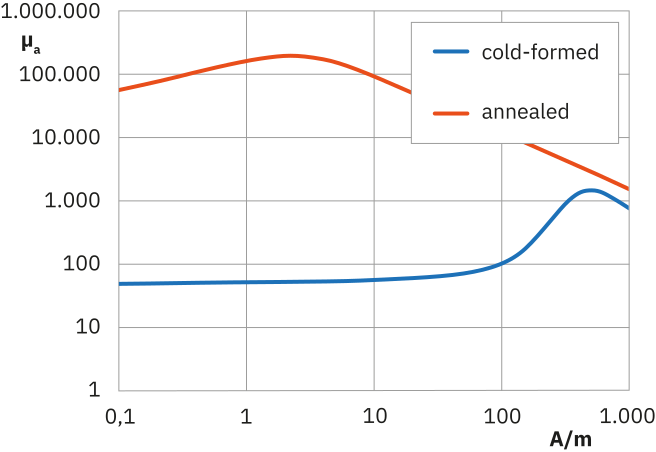
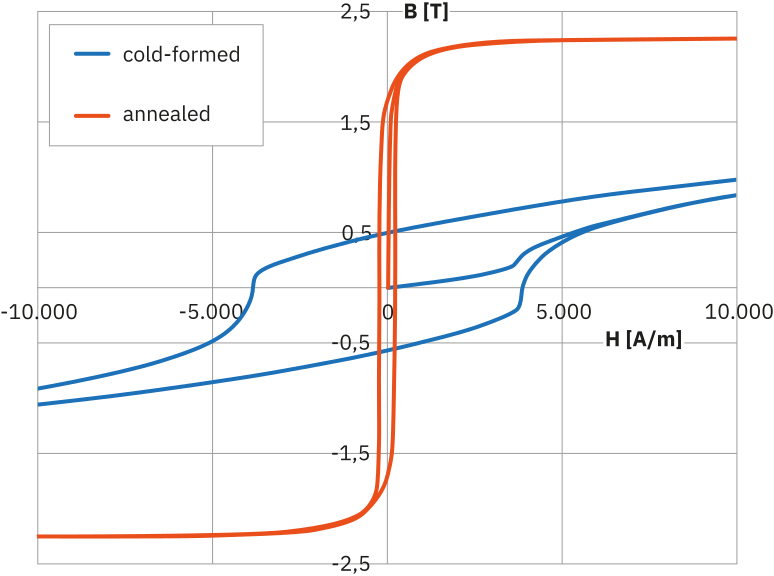
Semi-finished products made of NiFe (e. g. MUMETALL®), CoFe (e. g. VACOFLUX®) are supplied in the “mechanically hard” condition (for stamping, turning and milling) or “soft deep-drawable” (only strips, only NiFe or soft iron alloys). The magnetic properties of these alloys are “fairly moderate” in these conditions. As a rule, they cannot be used for the intended application without final magnetic heat treatment. The very clear differences before and after (optimum) heat treatment are shown in the figures for MUMETALL® and VACOFLUX® 50.
The final magnetic heat treatment not only optimizes the magnetic properties, it also changes the mechanical properties. Optimally adjusted soft magnetic alloys are generally also relatively soft mechanically and must be treated with corresponding care. Any plastic deformation significantly and irreversibly damages the magnetic properties (unless the annealing is repeated).
The annealing process itself is quite complex. The parameters specified by the material manufacturers cannot usually be reproduced by "normal" hardening shops.

- Annealing under hydrogen up to 1150 °C
- Optimally matched to the specific alloy (e. g. MUMETALL®, PERMENORM®, VACOFLUX®/VACODUR®)
- Consideration of application-specific requirements
- Customer-specific temperature profiles, also for other alloys, are possible within the scope of the furnace performance data